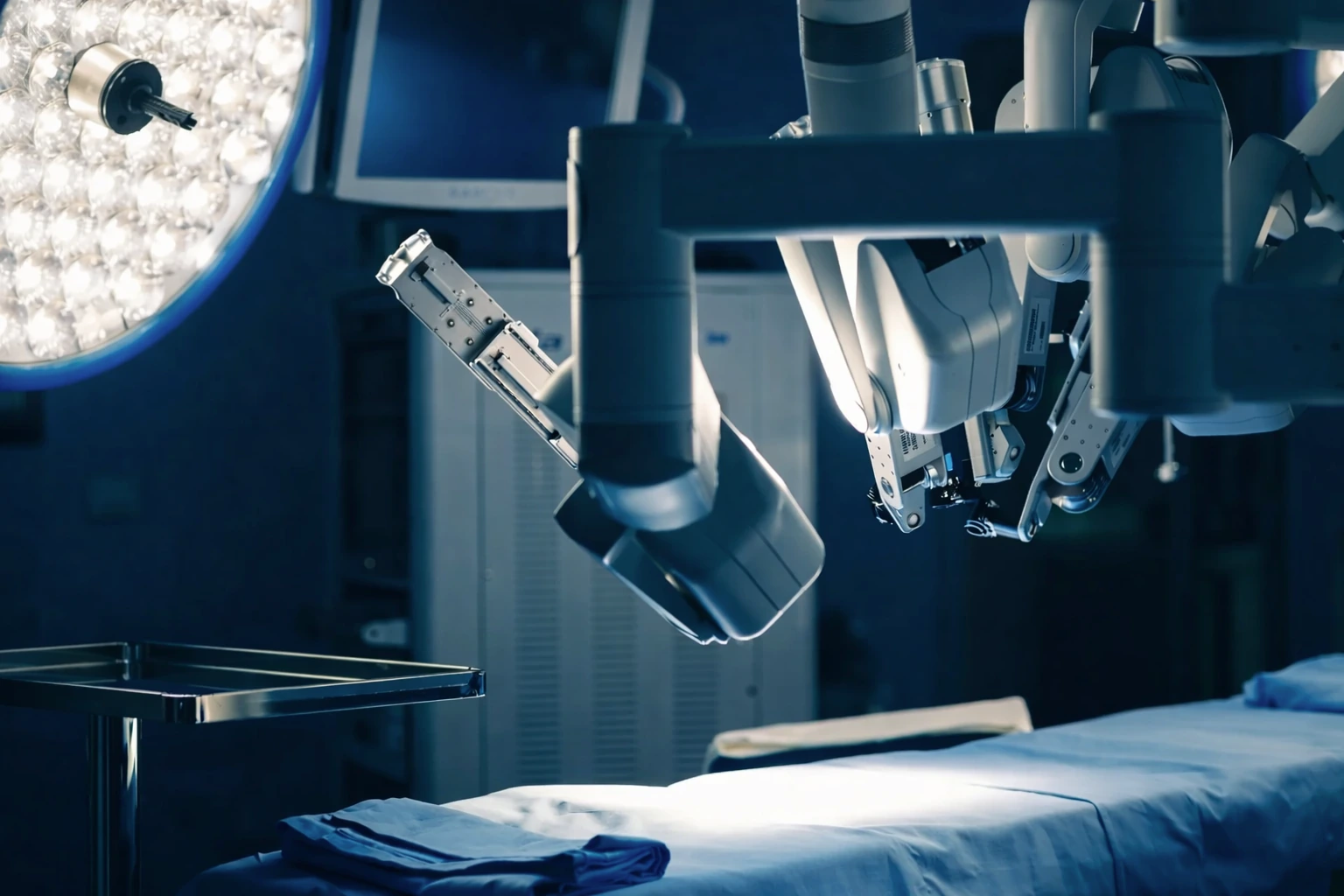
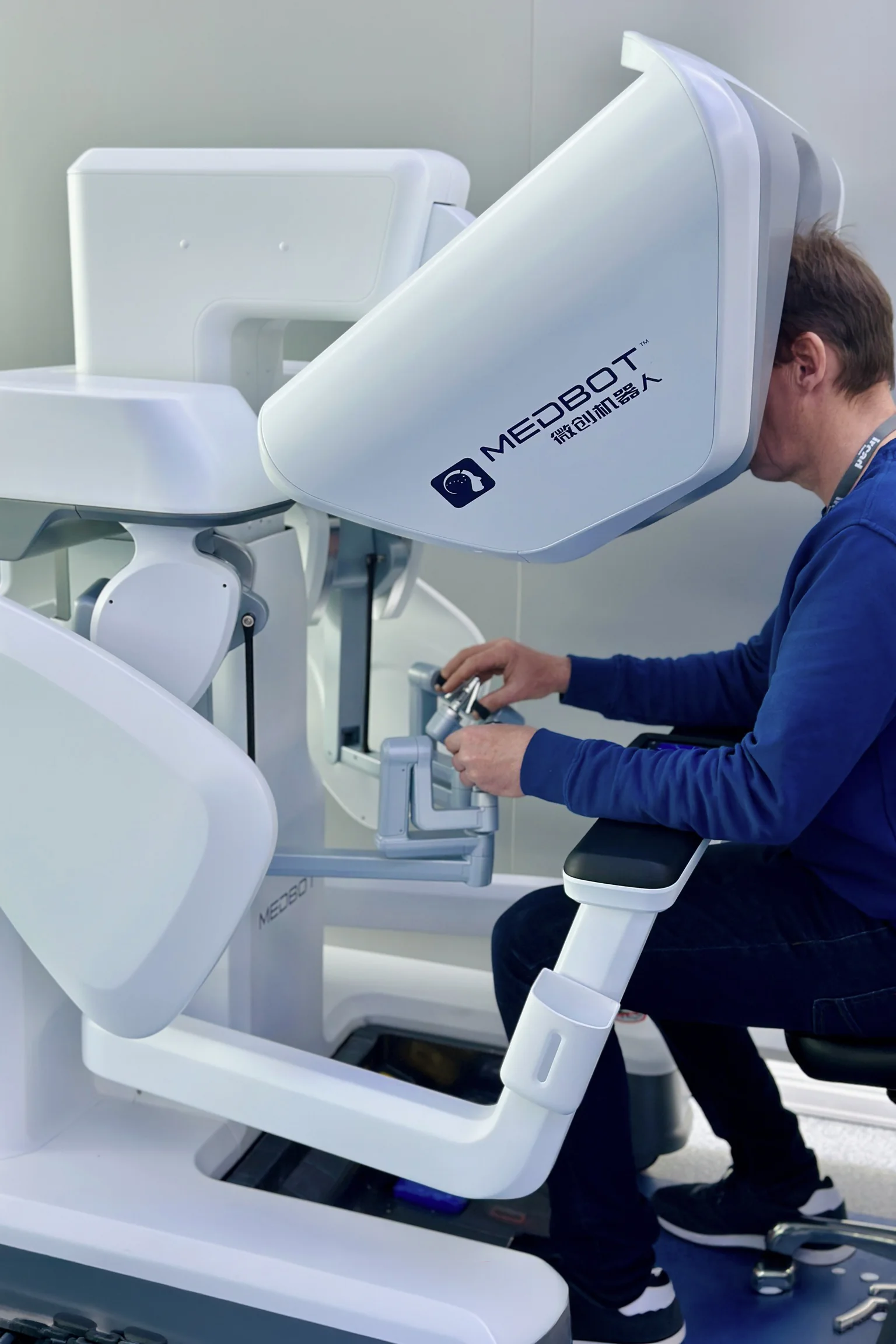
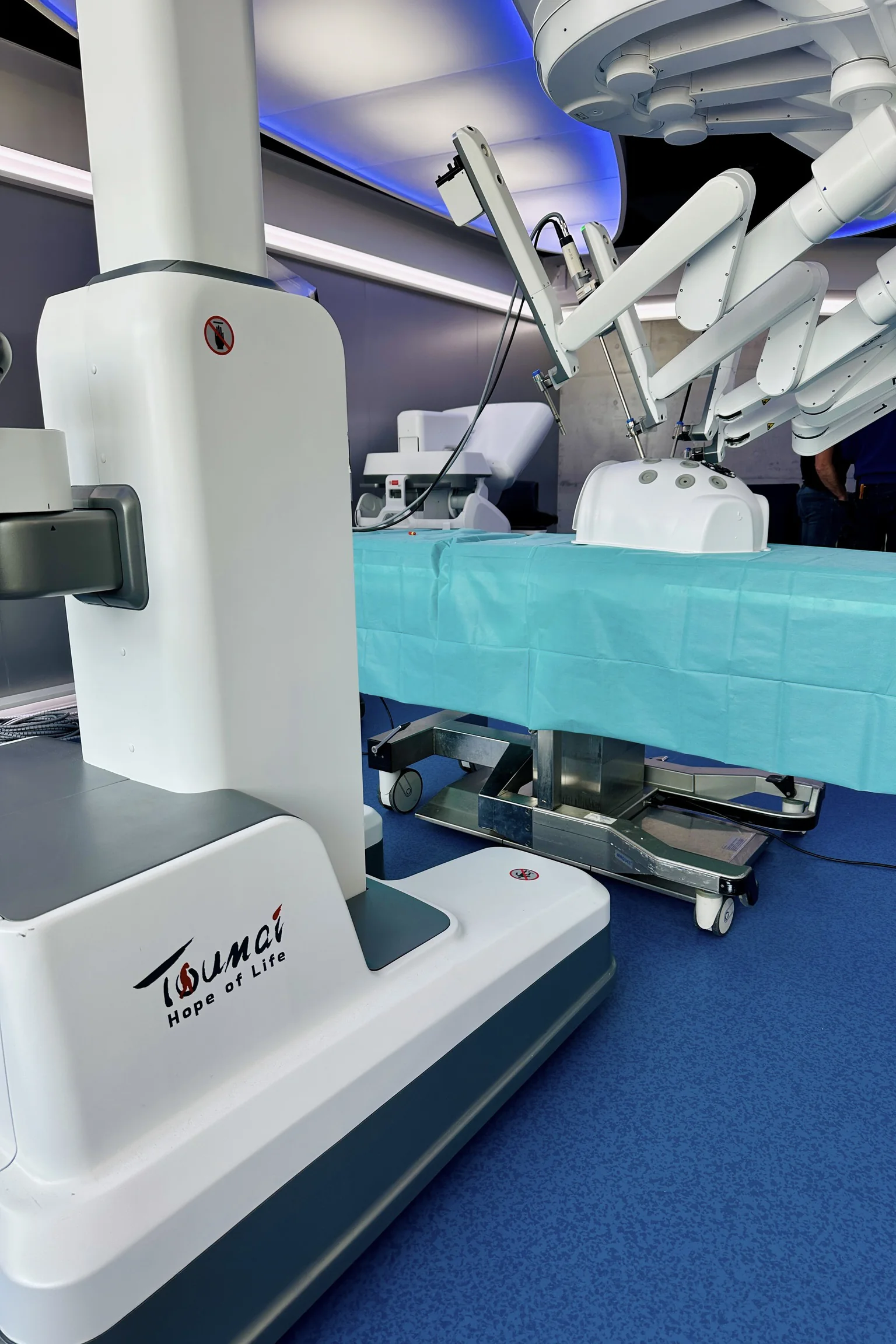
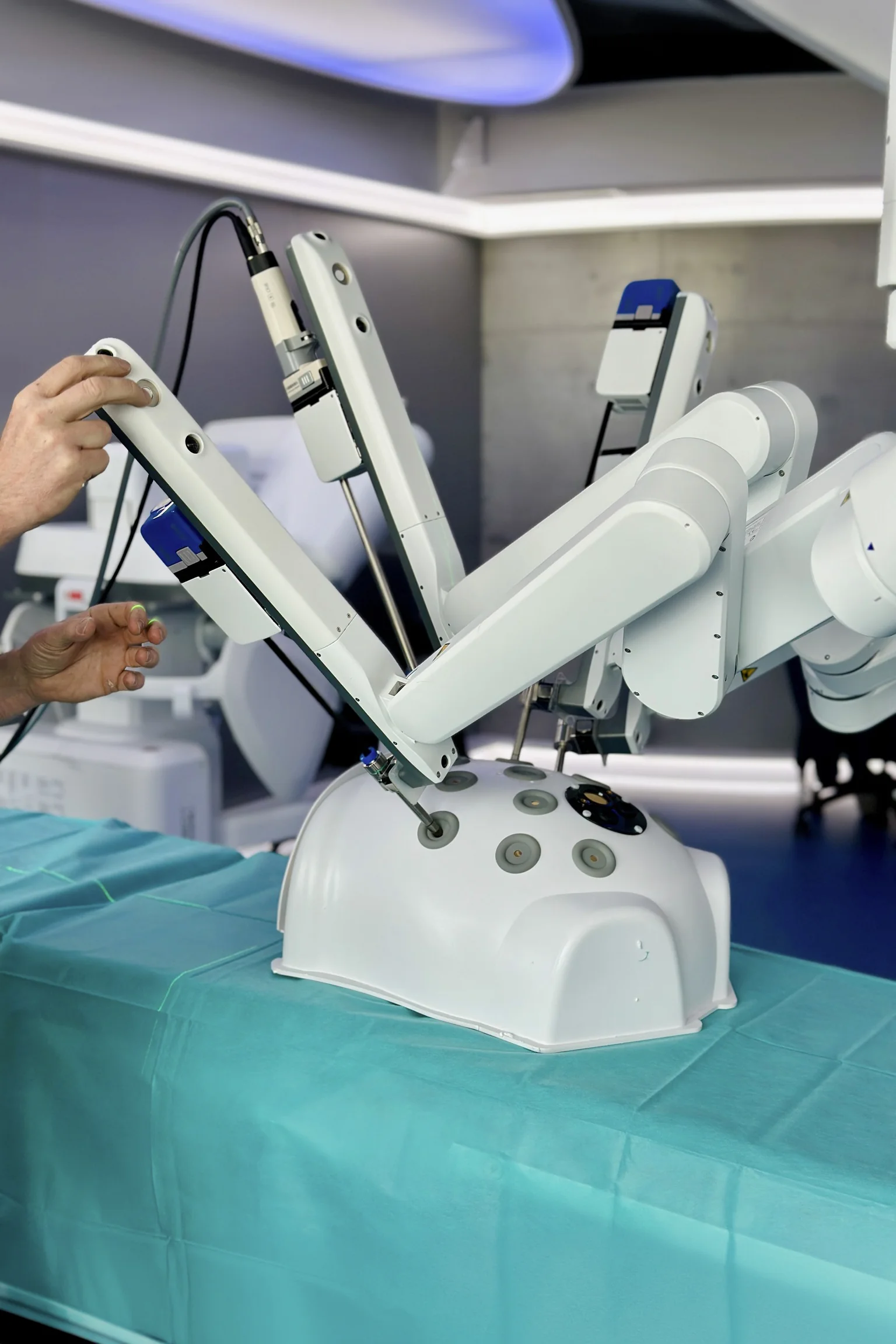
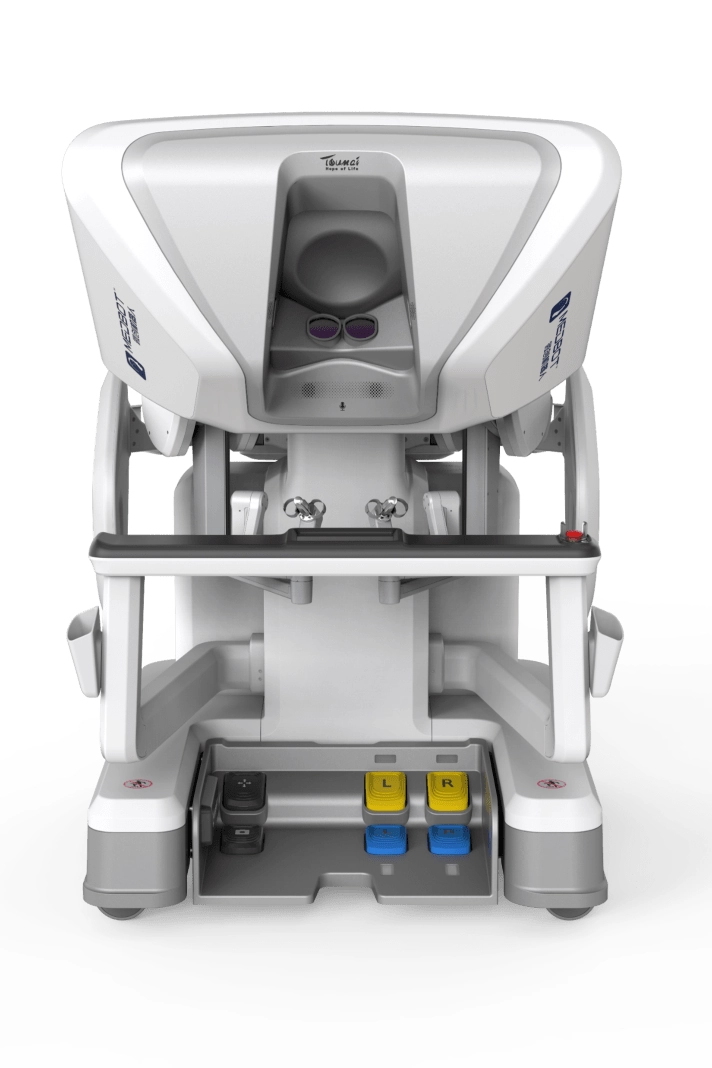
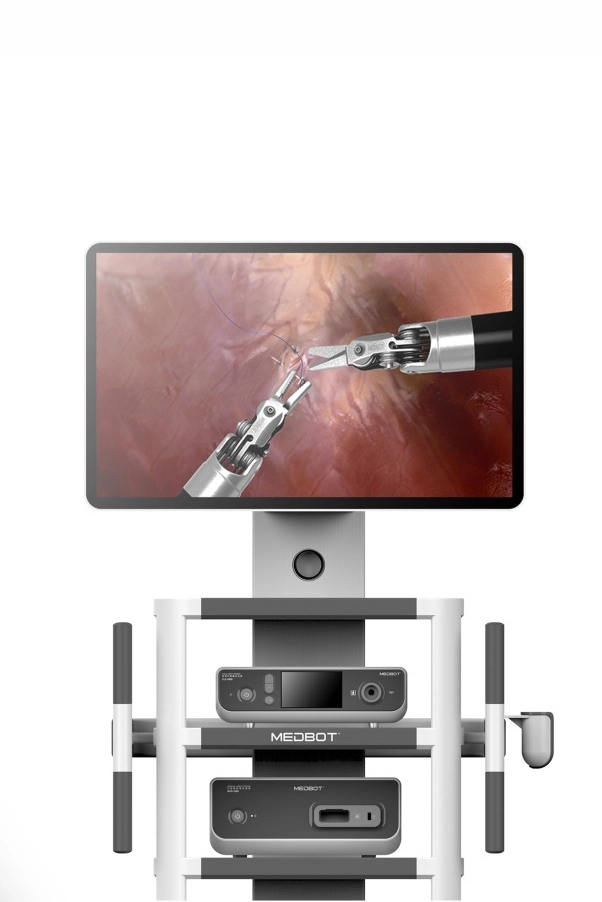
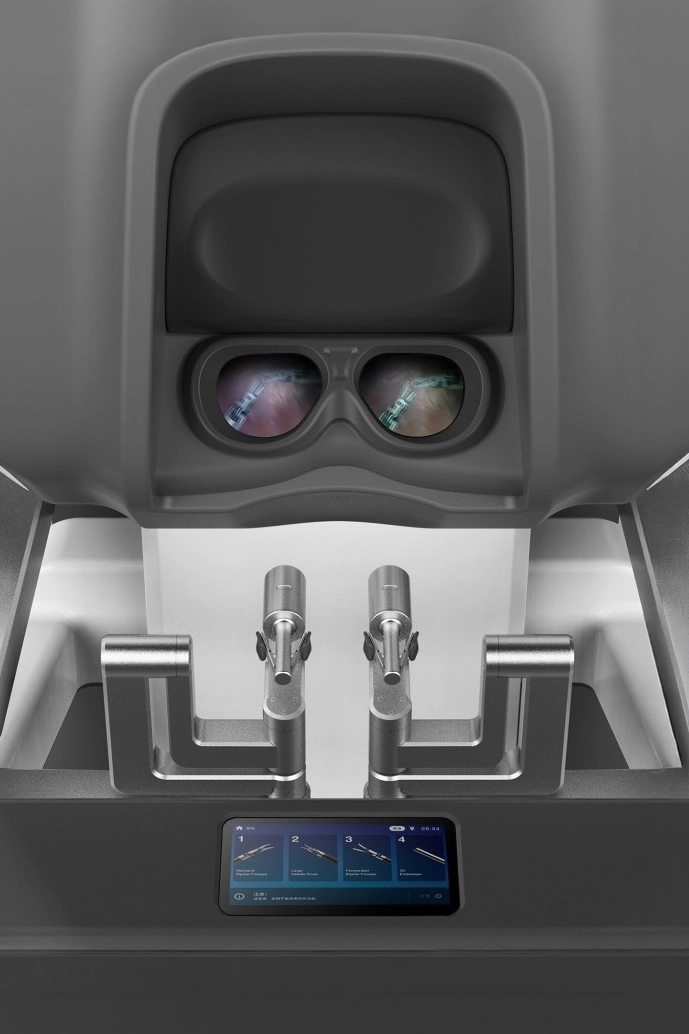
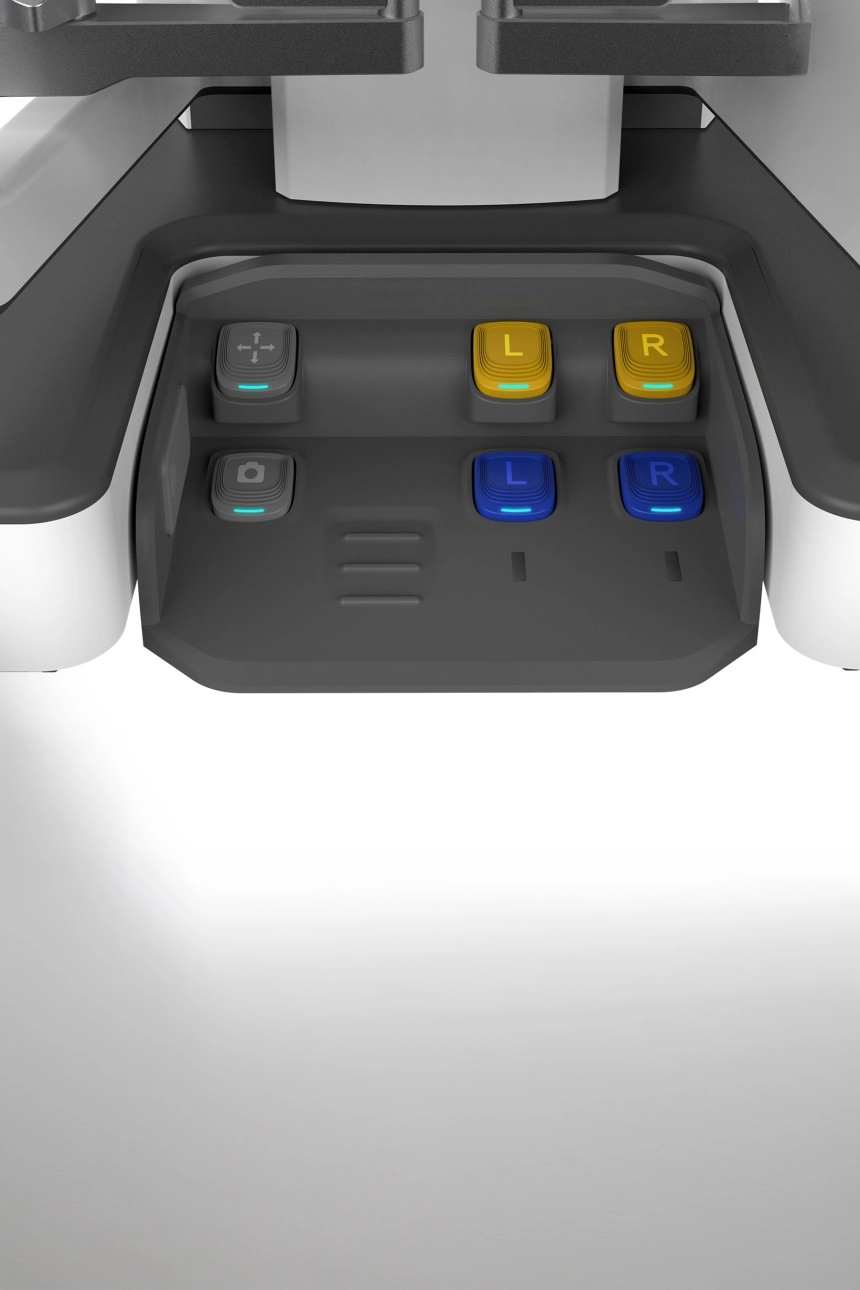
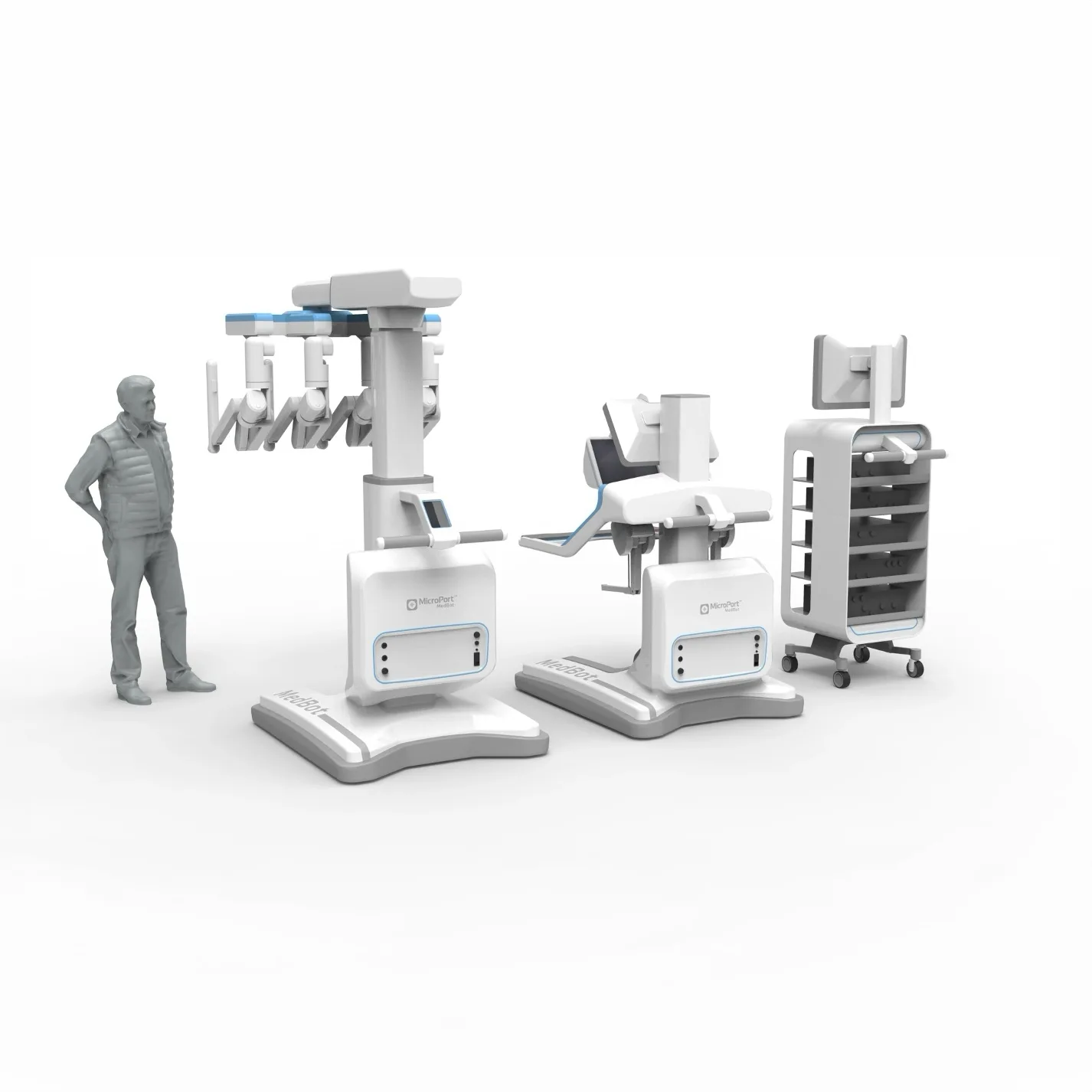
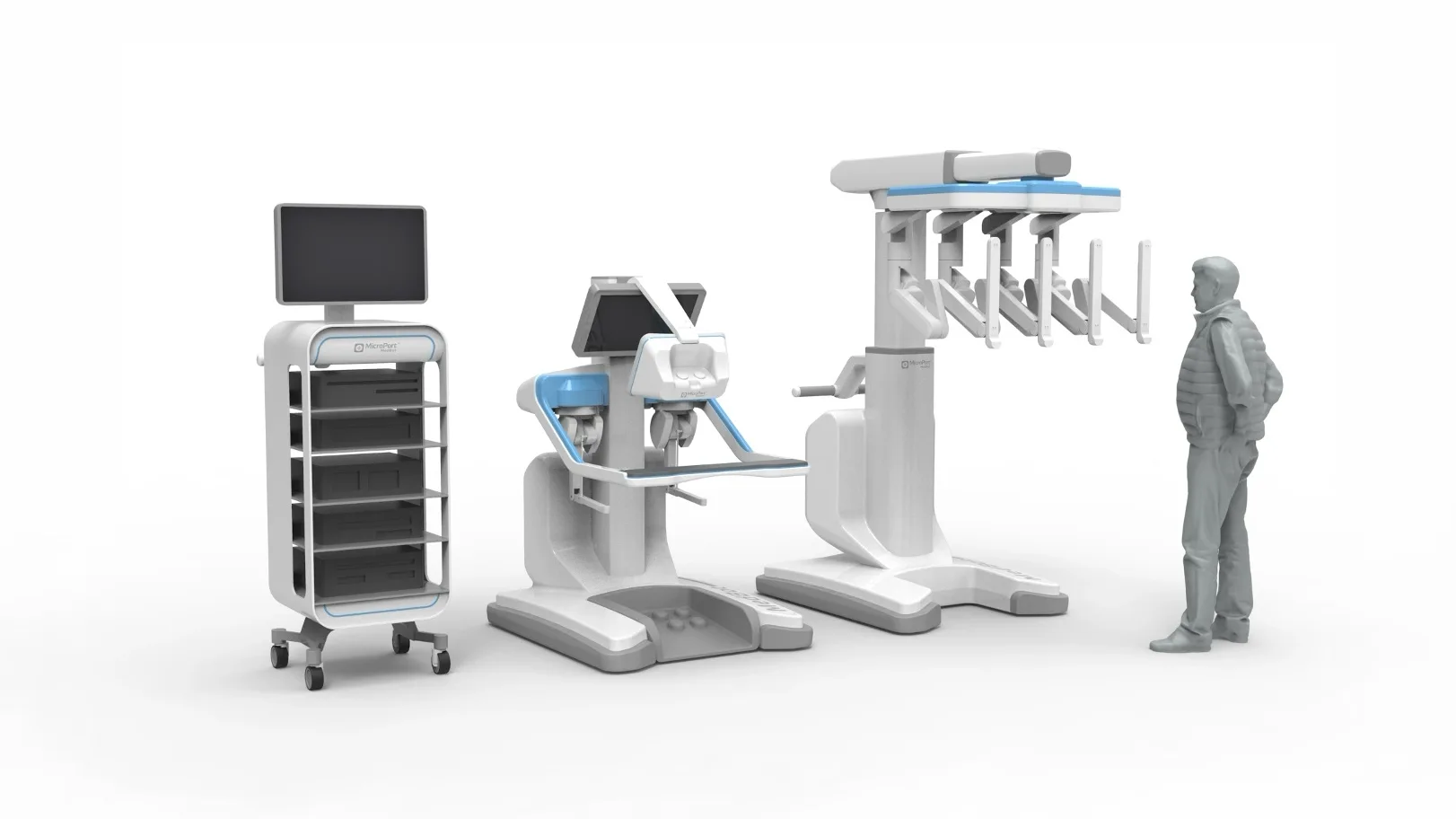
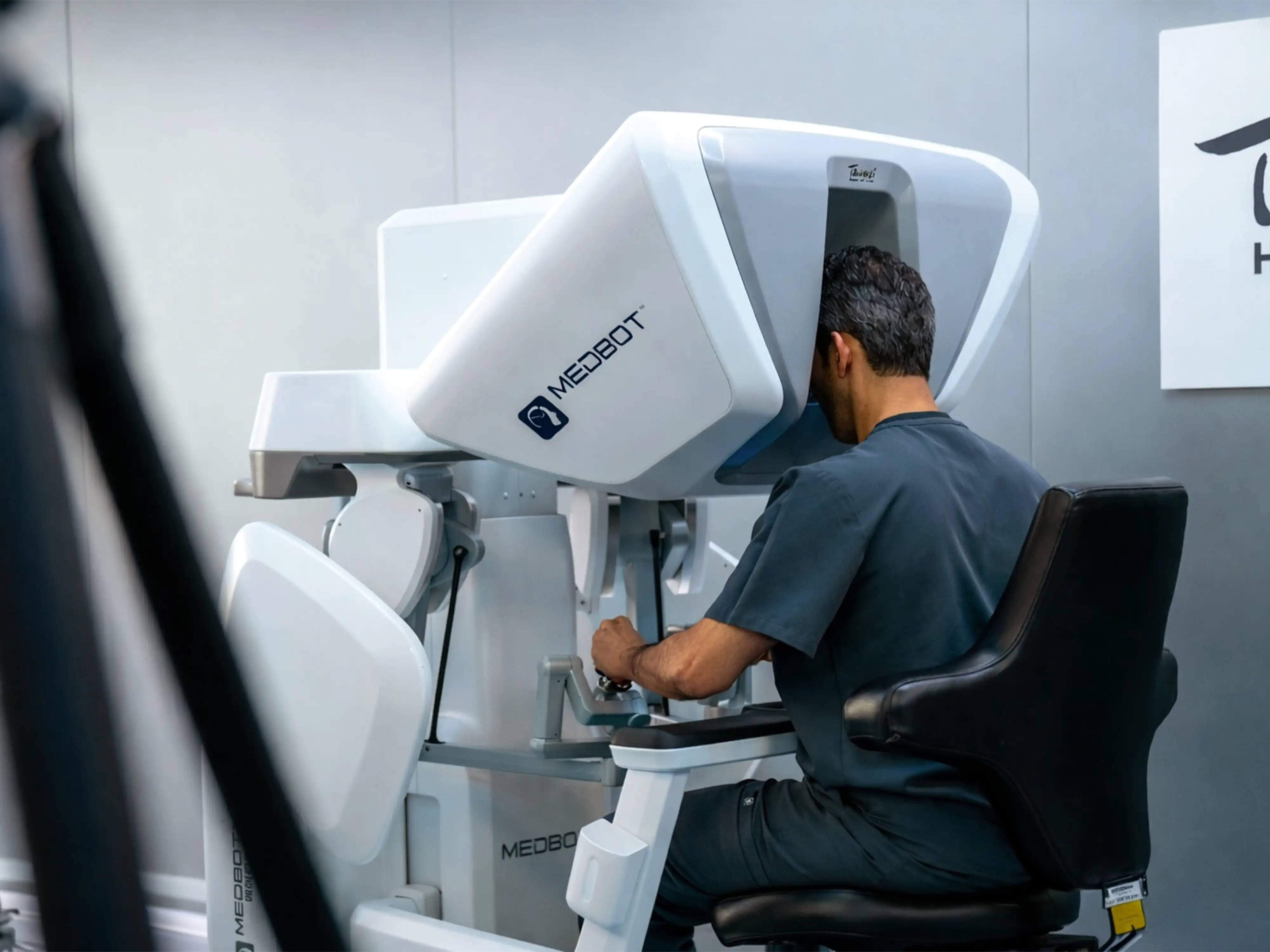
Speck Design partnered with MicroPort to shape the industrial design vision for a next-generation surgical robotic system composed of a vision cart, surgical cart, and console cart. Our role was to create a unified design language across the full platform—balancing a clean, modern clinical aesthetic with thoughtful user interaction and a strong sense of system cohesion. Through design exploration, experience-principles development, and concept refinement, we helped define a surgical ecosystem that feels precise, approachable, and purpose-built for the operating room.
From early concept exploration to final CMF and surface delivery, the project translated advanced robotic technology into a more intuitive and visually coherent surgical experience.
Research
Overview
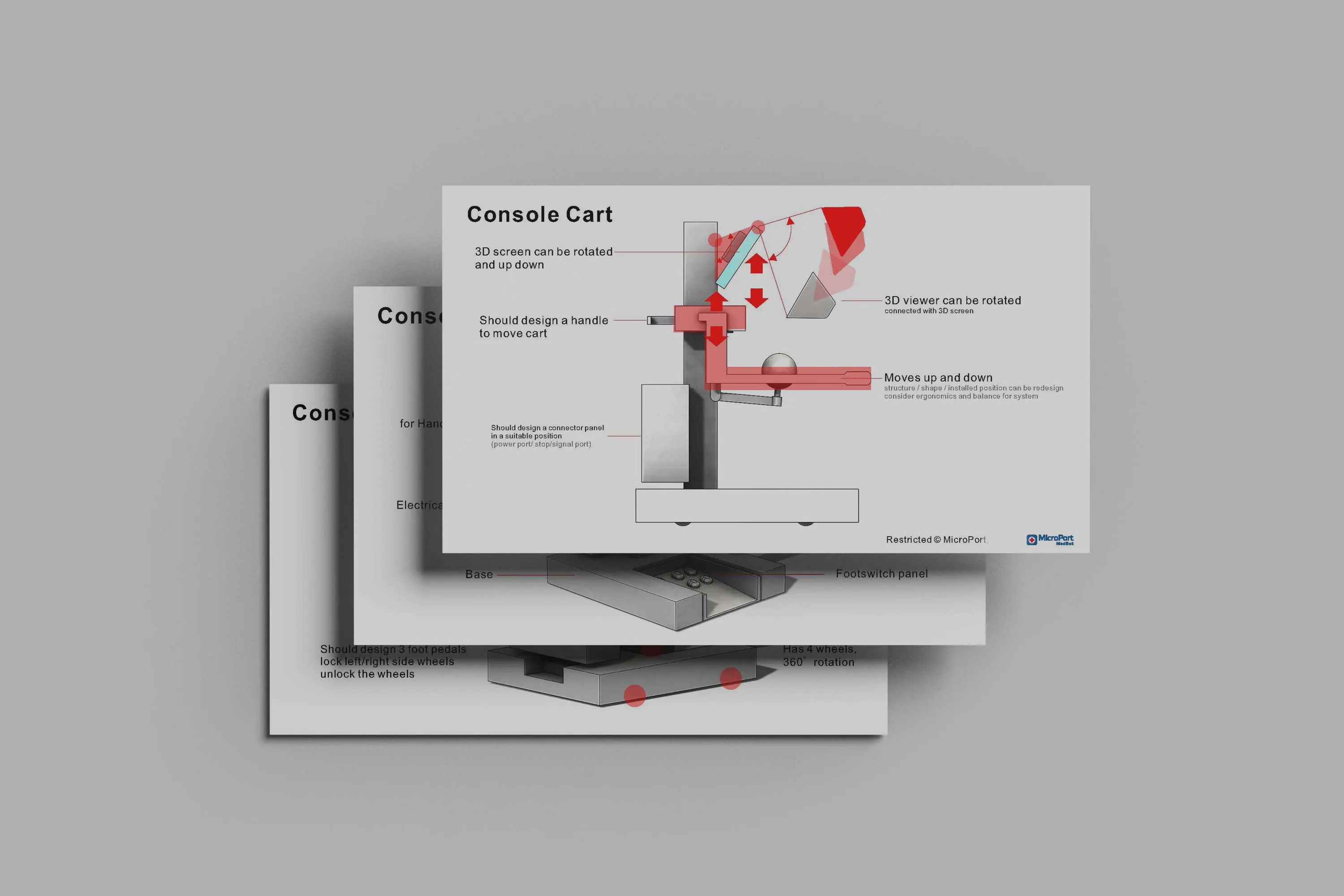
The program began with focused design research centered on workflow, interaction, and brand intent. We worked closely with the MicroPort team to understand product requirements, technical constraints, competitive context, and the qualities that would differentiate the system in an evolving surgical robotics landscape. That insight informed a set of Experience Principles that guided everything from overall form to how each cart should communicate function, precision, and ease of use.
Key Outputs
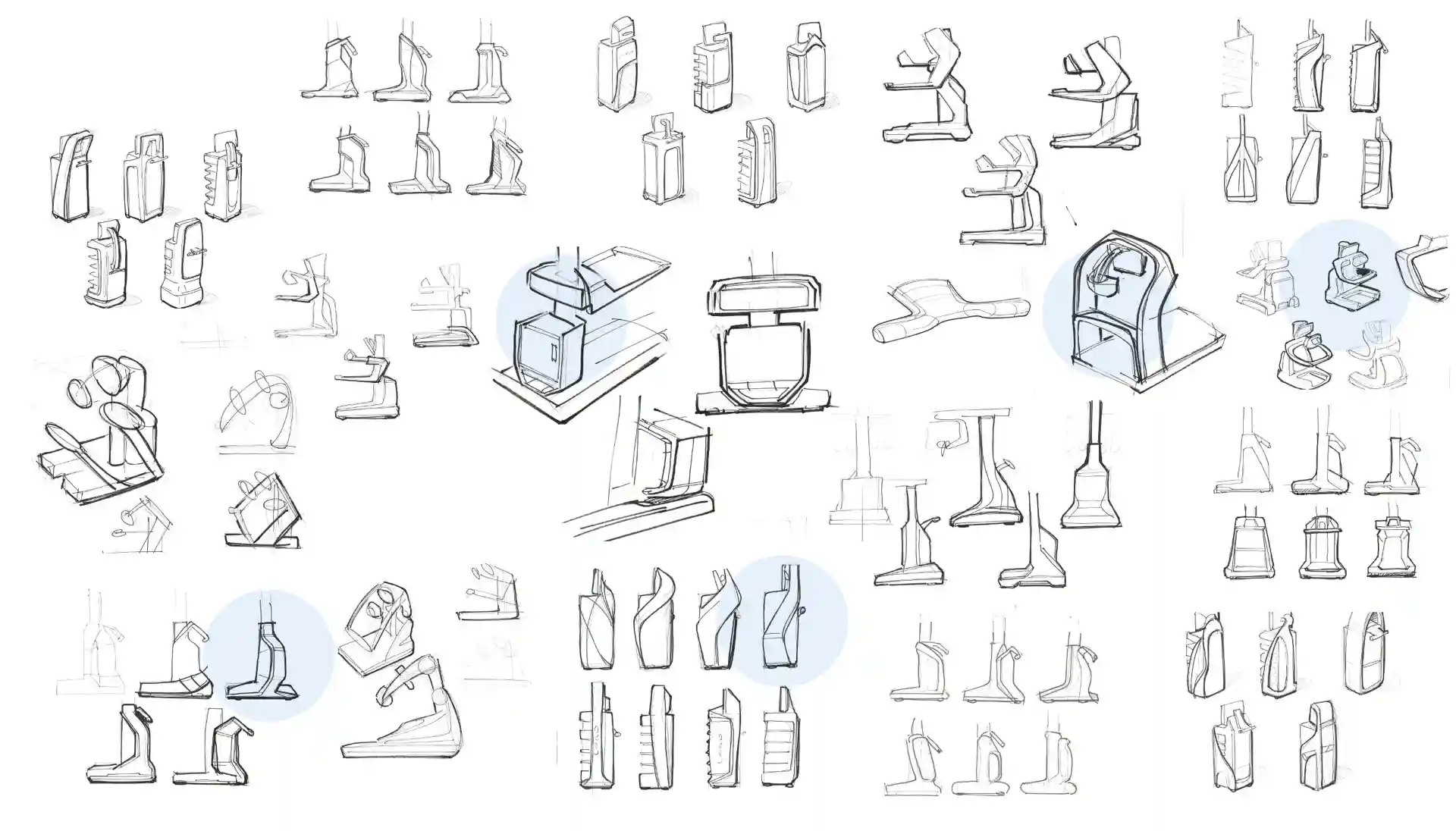
Key outputs from this phase included experience principles, user interaction concepts, and a broad range of digital design explorations for the vision cart, surgical cart, and console cart. This work established the strategic foundation for the system’s industrial design, clarifying how the three elements should relate to one another visually and experientially while supporting a high-performance clinical workflow.
Industrial Design
Overview
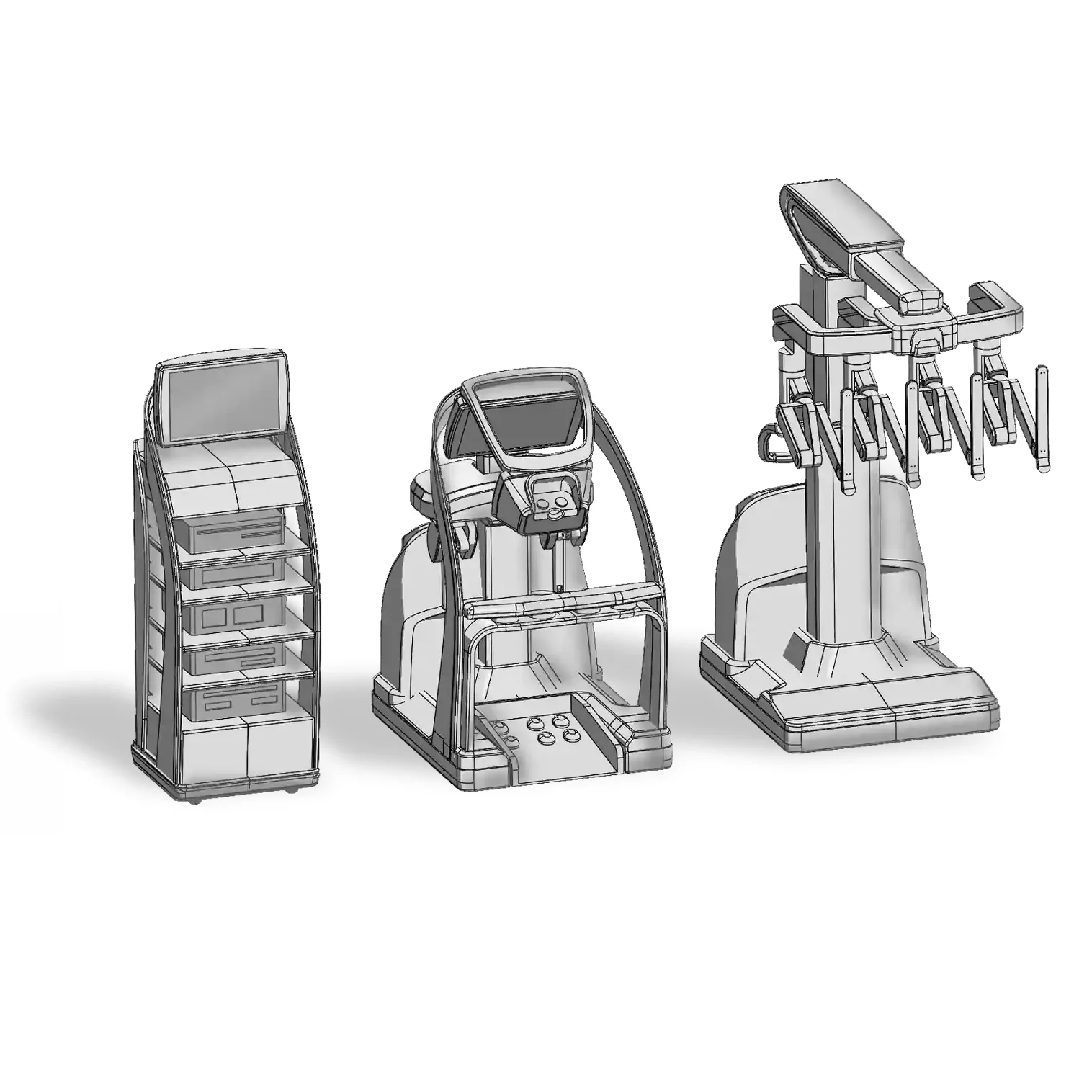
With the design direction established, Speck refined multiple concepts into a more resolved industrial design language across all three system elements. We explored proportion, form hierarchy, ergonomic considerations, attachment logic, and material expression to create a platform that feels clean and contemporary without sacrificing clinical credibility. As the work progressed, the design was distilled into a single direction and developed through detailed surfacing, CMF definition, and final visual refinement.
Key Outputs
The final phase delivered a cohesive system-level design package including refined concept renderings, CMF specifications, and a surface database ready for handoff to MicroPort’s engineering team. These outputs gave the program a clear visual and experiential framework for continued development while preserving a strong, unified identity across the full surgical platform.
.png)