.png)


A robot's body is its first interface. Before anyone reads a spec sheet or touches a screen, they decide in about a second whether they are comfortable standing next to the machine — and that decision is made by its shape, its surface, its face or lack of one, and what happens when it bumps into them. Robots lose that trust in two directions: by looking like bare machinery that could hurt you, or by looking so nearly human that something feels wrong. I have designed everything from hand tools sold in big-box stores to automated steering systems for farm equipment, and in four robots our team at Speck Design has helped bring to market — a Google humanoid, an office telepresence robot, a home-assistance biped and a warehouse mobile robot — the work that mattered most was never making the machine more human. It was making it readable: a body that tells you what it is, where its attention is, and what it is about to do.
The two ways a robot loses you
The first way is the obvious one. A robot that shows its frame, motors and cabling reads as industrial equipment, and people treat it like a forklift: keep clear, do not touch. That is fine on a factory floor with a painted yellow line. It fails the moment the robot has to share space with people who did not sign up to work around it — an office, a hospital corridor, a home.
The second way has a name. In 1970 the roboticist Masahiro Mori observed that our affinity for a machine rises as it becomes more humanlike, then drops sharply just before it becomes indistinguishable from a person. A face that almost moves right, skin that almost looks right, a gait that is almost natural — "almost" is the whole problem. So the question for a robot that lives among people is not "how human should it be?" It is "what does this body need to say, and to whom?"
The humanoid wave is picking sides
Half a century after Mori, a new generation of humanoid companies is walking along the edge of his valley, and the interesting thing is how many of them are choosing not to have a face at all.
Boston Dynamics' production Atlas, unveiled at CES in January 2026, has no face. It has a ring of light where a face would be, and a small nod actuator in the neck. The nod is there for the robot's own cameras — it lets Atlas look at its own feet — but Boston Dynamics' team has been open about the side effect: on a floor full of people, a head that tilts is a head you can read. Agility's Digit got a white oblong head with LED eyes for one reason — so it can show which way it is about to turn — and Agility's head of product has said plainly that "the minute you hit the uncanny valley, people don't trust it." Figure's third-generation robot is wrapped in soft textiles with foam at the pinch points, and its screens sit on its sides, for identifying which unit you are looking at, not for pretending to have expressions. 1X's NEO, the one meant to live in your house, wears a knit suit and two round, beady eyes; its VP of product and design describes the goal as making it "neutral top to bottom, and then, if anything, make it a little cartoonish."
None of those teams is trying to look human. They are trying to be readable — and the research agrees with them. A study of 157 robot faces found the three least trustworthy were the one without pupils, the one without a mouth — which participants kept calling "creepy" — and, less obviously, the one with eyelids; a face that is almost a face is worse than a clear icon.
Here is what those same decisions looked like on four robots we shipped.
Google's humanoid got its skin from an anime
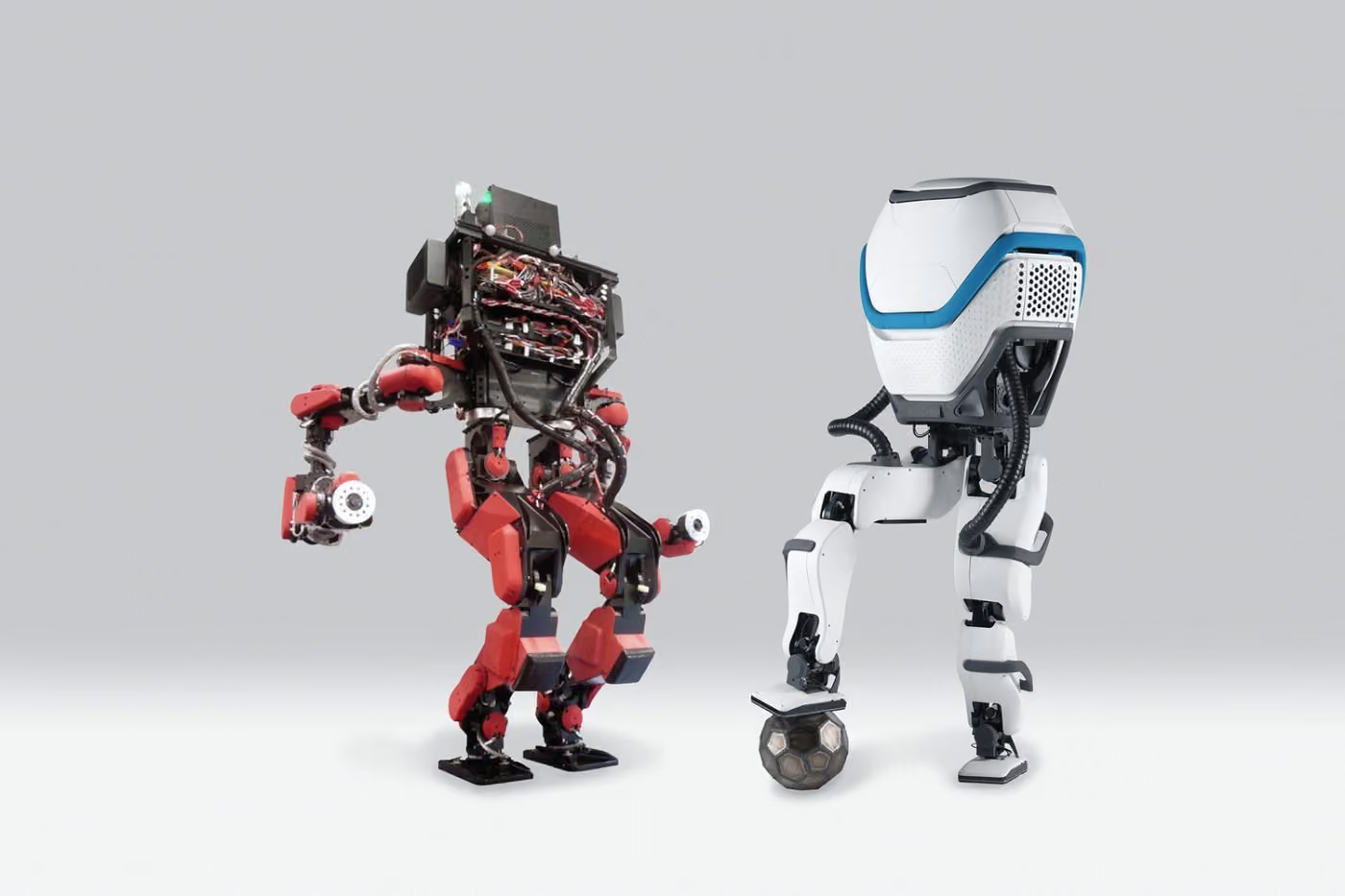
When we worked with Google's SCHAFT team on a functional skin for their humanoid, the brief had two halves that pulled against each other. The skin had to be protective: SCHAFT's robot was going to fall and collide, so the material had to be impact-resistant yet light and flexible enough not to restrict its movement. And it had to make the robot less intimidating to be around.
Our industrial-design team's answer was to lean away from realism, not toward it. The visual language took its cue from the Patlabor anime — a deliberately stylized look that gave the robot a personality without pretending it was a person. The skin was then engineered for a first low-volume run of 200 units, which is the other half of this story — a robot's "face" is also a manufactured part, with a wall thickness, a draft angle and an assembly sequence.
The office robot that had to be invited in
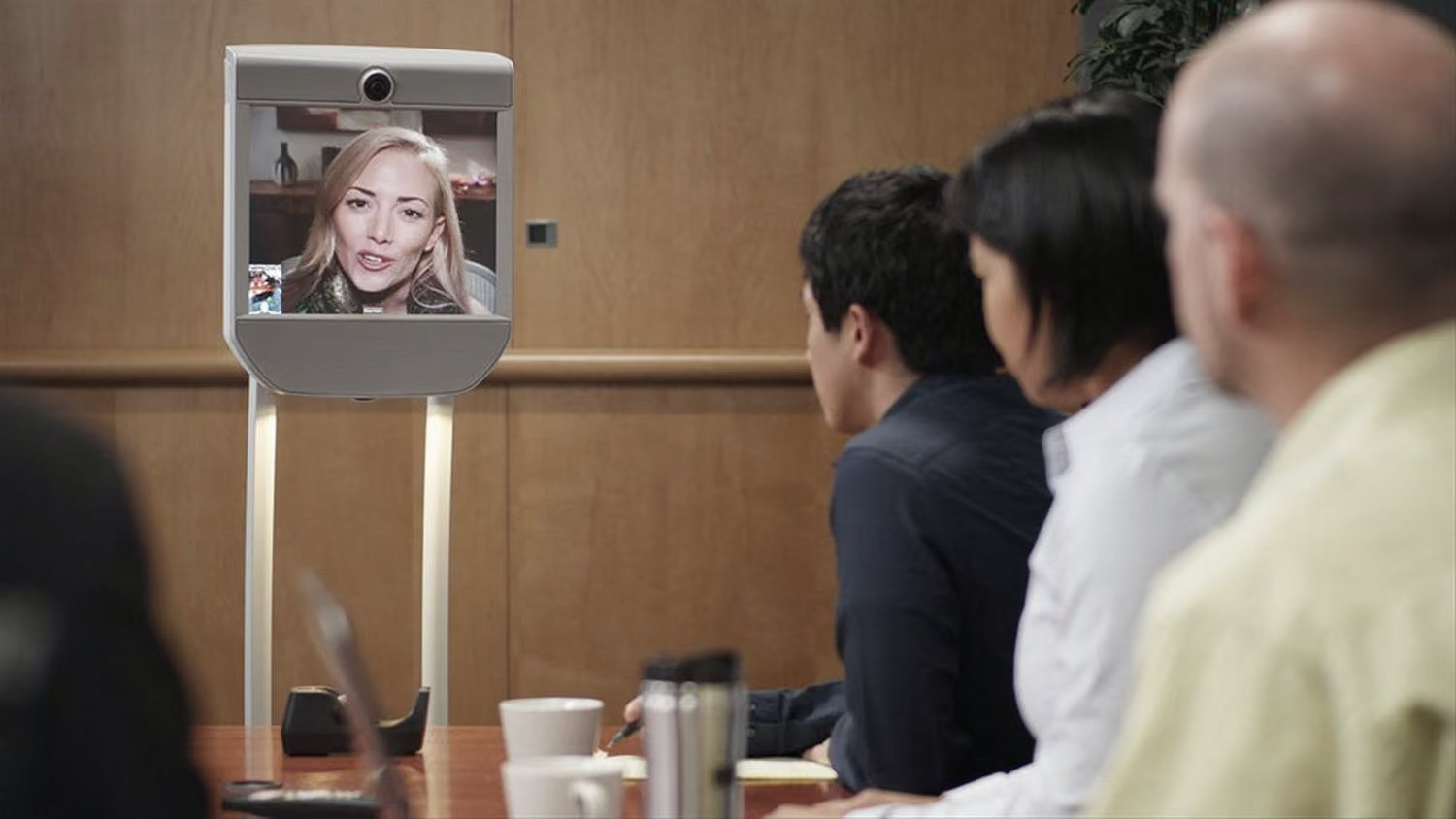
Suitable Technologies' Beam is a telepresence robot: a screen, a camera and a drive base that let a remote colleague roll into a meeting. Nobody in the office asked for a machine to be driving around their desks, so the design goal was blunt: move people from intimidation to curiosity. Beam got a sleek, minimal form that concealed its A/V and motor hardware, an approachable proportion, and a docking station that was simple to read — so the robot's most frequent behaviour, parking itself, was obvious to everyone in the room.
The trust work continued below the surface. Our mechanical engineers gave Beam front and rear bumpers tuned for maximum energy absorption and minimal shock transfer, and a sheet-metal base with an integrated suspension so it could cross thresholds without lurching. A bumper is a social decision as much as a structural one. It is the robot's promise that when it does hit something — and it will — nothing bad happens.
Walking the line on purpose
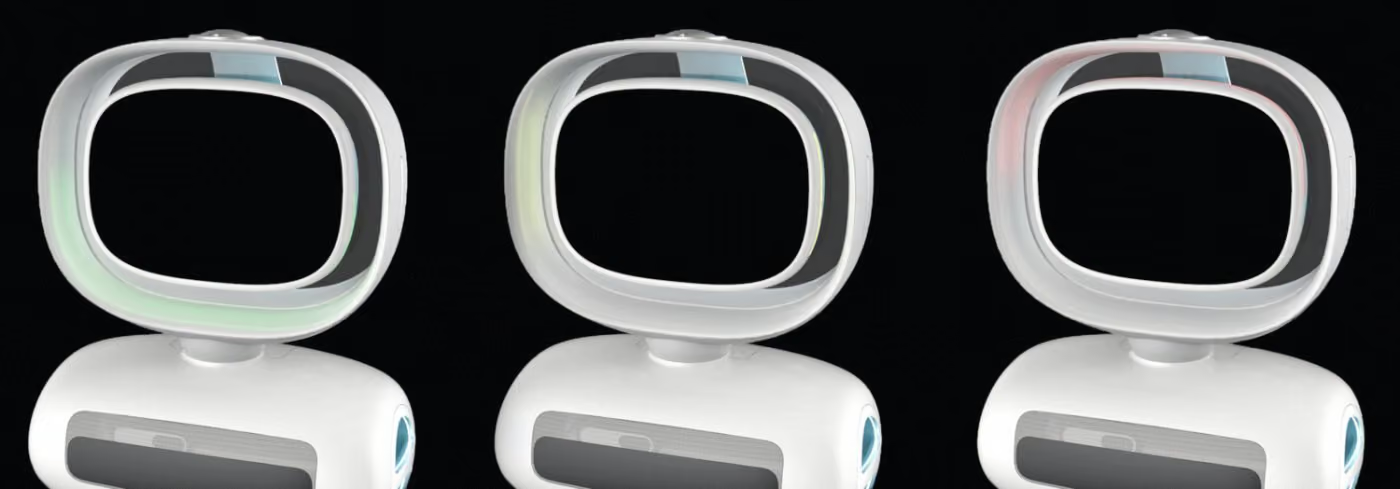
UBTECH's Walker is the case that lives closest to the valley. It is a biped built for home and healthcare assistance, and the whole point was human-like mobility: bending, balancing, climbing and descending stairs. Our designers used what we called kinetic bio-mimicry — movement that reads as natural — while the engineers worked out where sensors and motors could sit without restricting that motion.
The line was held with one decision: Walker's face is a large touchscreen, not a face. It keeps the humanoid silhouette people find easy to read, and it gives the robot an honest way to show where its attention is — words and graphics on a display — instead of an attempt at expression that would have had to be perfect to avoid being unsettling. Humanoid enough to be relatable; machine enough to be trusted.
Even a warehouse robot has body language
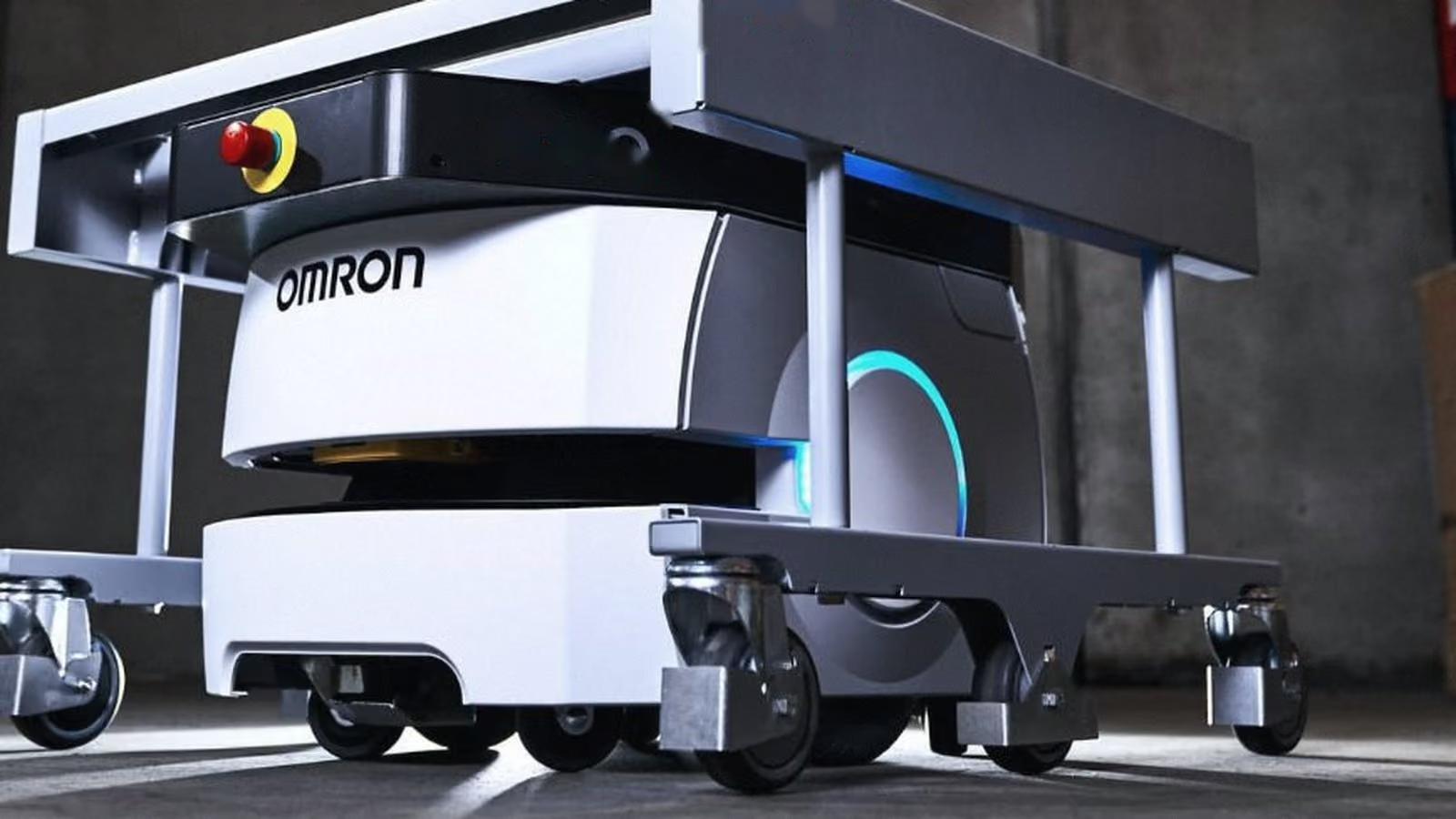
Omron's LD60 autonomous mobile robot is not humanoid and never will be. It moves material around facilities where people walk past it hundreds of times a day. Our work with Omron began with field research into those environments and the people in them, and the goal that came out of it was that the robot should feel less like a tool and more like a predictable part of the workflow — you should be able to tell, at a glance, which way it is headed.
Industrial design gave the LD60 a form that belongs to the Omron family, so the whole fleet reads the same way. Mechanical engineering went into the skins and bumpers — durable enough for daily contact and designed for volume production, down to wall thickness, draft angles and ribs. The parts that make a machine safe to be near are the parts that get touched, scuffed and replaced, so they have to be manufacturable at scale.
If you are building one
Most robotics teams we meet have already solved the hard problems — a chassis, an autonomy stack, perception that works. What they do not yet have is a body people will accept, and that is where promising machines stall. Three questions are worth asking before the first enclosure is modelled:
What does the body say it is? Pick a side of the valley on purpose. Stylized and obviously a machine is almost always the safer, friendlier choice; realism is a bet you have to win completely.
Where is it looking, and what is it about to do? A clear front, status lights, a display, the sound it makes before it moves — these are the robot's manners, and they cost far less to design in than to bolt on after a pilot goes badly.
What happens when it touches someone? Bumpers, soft skins, energy absorption, pinch points. Then the part nobody budgets for: making those parts producible at ten units, then a thousand.
At Speck, our industrial designers and mechanical, electrical and user-research teams work as one group on exactly this layer — the enclosure, skin, HMI and production-ready mechanicals on top of a robotics platform you have already built. If you have a machine that works and need it to be welcome, see our robotics work or start a conversation.
FAQ
What is the uncanny valley in robot design?
The observation, made by roboticist Masahiro Mori in 1970, that people's comfort with a humanlike machine rises as it becomes more realistic, then drops sharply just before it becomes indistinguishable from a person. Robots that are obviously stylized sit on the safe side of the dip; near-realistic ones risk falling into it.
Does a robot need a face to be trusted?
No. It needs to be readable — a clear front, a way to show where its attention is and what it will do next, and a body that signals it is safe to be near. A display, lights or sound can communicate more honestly than an attempted human face.
What is a robot skin, and why does it matter?
The external enclosure and soft or rigid covers over a robot's frame. It protects the mechanism from falls and collisions, protects people from the mechanism, and carries most of the robot's visual character. It is also a manufactured part that has to be designed for the production volume you actually expect.
What should a robotics startup look for in a design and engineering partner?
A team that treats industrial design, mechanical engineering and human-factors research as one job, has shipped robots that live among people, and can take an enclosure from concept to production tooling rather than stopping at a rendering.